Hard rubbish collection: what your council takes, when, and what is worth selling first
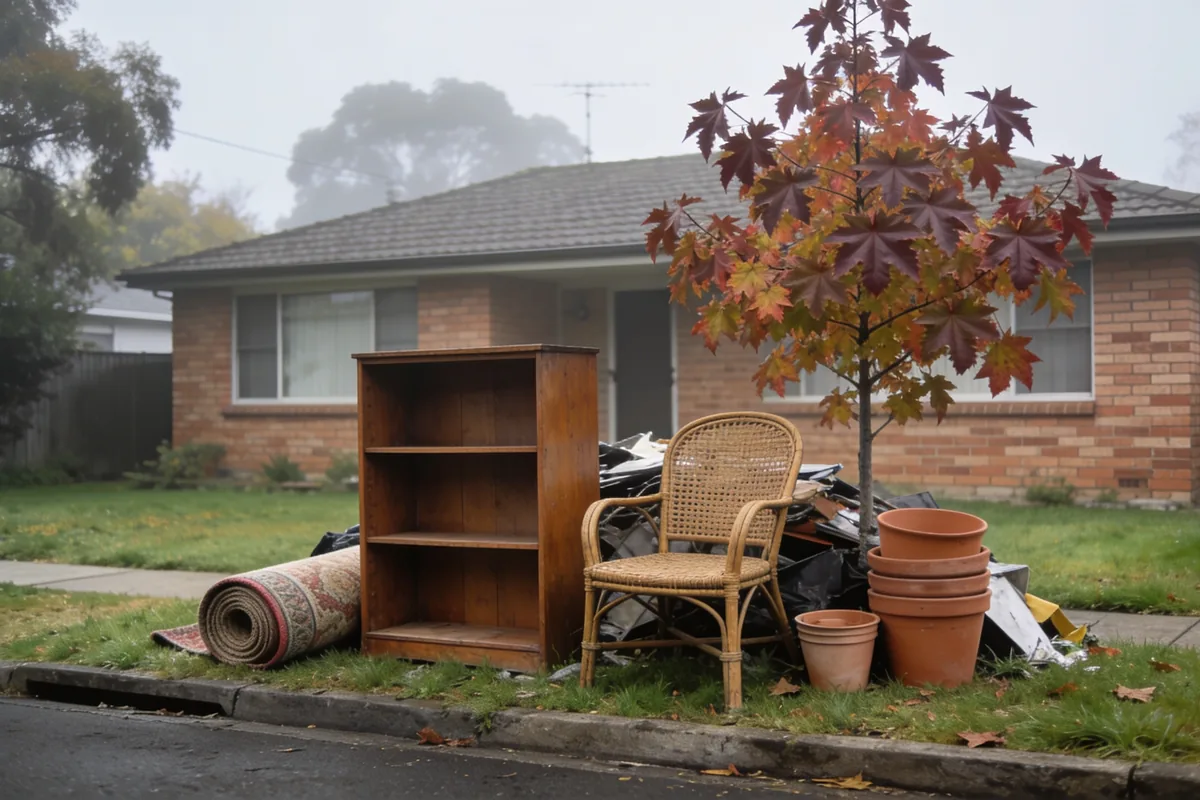
In collection week, the nature strips in some suburbs start to look like an open-air furniture shop. There’s an armchair outside one house, a bookcase outside the next, and a bike with a flat tyre leaning against a fence. Somewhere along the street, a neighbour is standing beside a pile and asking a fair question. Is that allowed to go out? Or, just as often, am I allowed to take it?
Hard rubbish collections are one of the handiest services a council runs, but they come with rules, and every council writes its own. The good news is that the rules tend to follow the same patterns. Once you know what to look for, your own council’s page becomes much easier to read. This guide uses Brisbane City Council as a worked example. It then covers the etiquette around piles, and the selling and giving that’s worth doing before anything goes out at all.
Booked or scheduled
Councils usually run hard rubbish in one of two ways.
The first is a scheduled collection. The council sets collection dates suburb by suburb, and everyone in that area puts their pile out in the same window. You’ll usually find the date on your council’s website, either in a collection calendar or by entering your address.
The second is a booked collection. Instead of a date for the whole street, you book a pickup for your own address, often online, and the council tells you when to put your items out. If your council uses bookings, check whether there’s a limit on how many you can make, and how far ahead you need to book.
Some councils use a mix of the two, and some have changed their system over time. It’s worth checking each time rather than relying on what happened last year.
To find your council’s page, search your council’s name along with “hard rubbish”, “kerbside collection”, “bulky waste” or “council clean up”. Different councils use different names for much the same service.
If you rent, talk to your property manager or landlord before booking a collection for the property. In a block of units, the strata or body corporate manager may organise collections for the whole building, so ask them first. Shared nature strips in front of units can get crowded quickly, and it helps everyone to know whose pile is whose.
Whichever system you’re on, write the date down as soon as you know it. A scheduled collection only comes round when it comes round, and missing it can mean a long wait with a lounge suite in the carport.
What councils usually take, and refuse
Brisbane City Council publishes a clear list of what its kerbside collection accepts. It’s a good example of how these lists are usually laid out.
Brisbane accepts items such as:
- furniture
- white goods, like fridges and washing machines
- small appliances and e-waste
- carpet
- bikes
- mattresses
- wood, as long as it’s under 1.5 cubic metres
And it won’t collect:
- batteries of any kind
- gas bottles
- chemicals, oils and paint
- glass and mirrors
- bricks and concrete
- car parts and tyres
- garden waste
- household waste, meaning your everyday bin rubbish
- lino or fibro sheeting
Some of those refusals are clearly about safety, such as batteries and gas bottles. Others, like garden waste and household rubbish, are about keeping each kind of waste in the service meant for it.
That’s Brisbane. Your council’s list will probably look similar in shape, but the details can differ in ways that matter. What one council accepts, the next one may refuse, and limits on things like wood or e-waste aren’t the same everywhere. So read your own council’s list before you start carrying things out to the kerb. It’s usually a single page, and it can save you from being left with a pile the truck won’t take.
The pile rules
Councils don’t only set rules about what goes in the pile. They usually set rules about the pile itself.
Brisbane’s rules show the kind of thing to look for:
- Piles over 2 cubic metres are not collected. For a sense of scale, that’s about the size of a stack two metres long, one metre deep and one metre high.
- Items should go out no more than 2 days before collection.
- If unacceptable material isn’t removed within 7 days, fines may apply.
Those three ideas, a size limit, a put-out window and responsibility for anything left behind, come up again and again. The numbers, though, vary from council to council. Yours might allow a different volume or a different window, or handle leftovers in its own way. Check before you build your pile.
A few habits make any collection go more smoothly. Keep the pile neat and on your own nature strip, clear of the footpath and the driveway. Put out only what’s on the accepted list. Keep anything you’re not throwing away well clear of the pile, so it isn’t taken by mistake. And if the crew leaves something behind, bring it back in promptly.
The put-out window matters for another reason, too. A pile that sits on the kerb for a week before collection tends to attract other people’s rubbish, which leads to the next question.
Taking from piles, and adding to them
For some people, hard rubbish week is a treasure hunt. Others aren’t so keen on strangers going through their things. So is taking from a pile allowed?
It depends on your council. When SBS looked into this in 2019, it reported that the majority of metropolitan councils did not treat taking items from kerbside piles as an offence. Some councils did have rules about it, and some asked people to seek the owner’s permission and leave no mess. That report is a few years old now, and councils can change their rules, so check your own council’s position if it matters to you. It isn’t safe to assume it’s allowed everywhere.
Whatever your council says, a few manners help:
- If the owner is home, ask before you take something. Plenty of people are pleased to see things go to a new home.
- Leave the pile as tidy as you found it. Nobody wants the rest of their neat pile scattered across the nature strip.
- Only take what you’ll actually use, so it doesn’t end up on another pile next year.
And please don’t add to someone else’s pile. It can seem harmless, but your extra items can push a pile over the size limit or add things the council won’t collect. Then that household is left with rubbish that isn’t theirs, and possibly a problem with the council as well. If you’ve missed your own collection, wait for the next one, or use your council’s booking or drop-off options.
Sell or give first
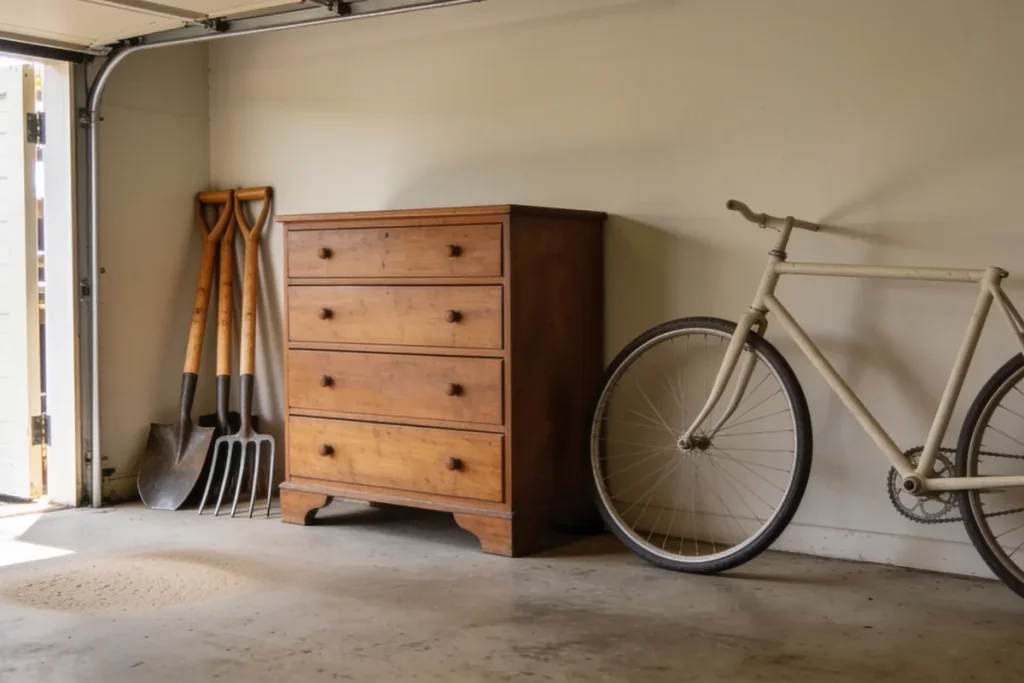
Before anything goes out to the nature strip, set aside an afternoon to sort through it. A surprising amount of what ends up in hard rubbish would sell, or would be useful to someone nearby.
Things that often sell well second-hand include:
- solid timber furniture, like dressers, tables and bookcases
- tools in working order
- bikes, even ones that need a little work
- outdoor settings
These are worth a proper listing with clear photos, measurements and an honest description. Our guide to writing a listing that sells walks you through it step by step. Give yourself a week or two before the collection date, so buyers have time to see it.
If you have lots of smaller things, a garage sale before the collection can clear them in a morning. Our guide to garage sale pricing explains how to price for a clear-out rather than a profit. For items that do better in front of a crowd, a market stall is another option, and our guide to weekend markets in Melbourne covers setting one up.
Then there’s giving. Local gifting groups, such as Buy Nothing-style community groups, suit things that still work but aren’t worth listing. Charity shops take donations too, but take them in during opening hours rather than leaving bags at the door.
A simple way to sort is to make three groups as you go through the garage: sell, give, and pile. Be honest about the first group. A worn sofa with a broken spring is unlikely to sell, however much you paid for it, and listing it only delays the decision. On the other hand, an old timber chest of drawers that looks tired might be exactly what someone is hoping to find and restore.
What’s left after all that, the broken, the worn out and the things nobody wants, is what the hard rubbish pile is for.
Hazards that never go out
Some things should stay off the pile entirely. Batteries of any kind and gas bottles are the clearest examples, along with chemicals, oils and paint. Brisbane refuses all of them, and you should check how your own council handles them.
That doesn’t mean they belong in your household bin either. Councils generally offer other ways to get rid of these items, such as drop-off points at a waste or recycling centre, or chemical collection days. Your council’s website will tell you what’s available near you. If you’re not sure how to deal with something, ask the council before you put it anywhere.
Read the council page, then the pile
Hard rubbish goes best when you start with your council’s page, not the garage. Find out whether your area is booked or scheduled. Read the accepted and refused lists, and note the size limit and the put-out window. Sell or give away what still has life in it, and keep hazards away from the pile altogether. And when you walk past someone else’s pile, have a look by all means, but leave it tidy and never add to it. With any luck, the truck takes everything and your nature strip is clear again by the end of the week.
Sources: Brisbane City Council, Kerbside collection acceptable items (https://www.brisbane.qld.gov.au/clean-and-green/rubbish-tips-and-bins/rubbish-collections/kerbside-large-item-collection-service/kerbside-collection-acceptable-items); SBS, Is it legal to pick up stuff left for kerbside collection?, 2019 (https://www.sbs.com.au/language/punjabi/en/article/is-it-legal-to-pick-up-stuff-left-for-kerbside-collection/jnc7qyt2p)