
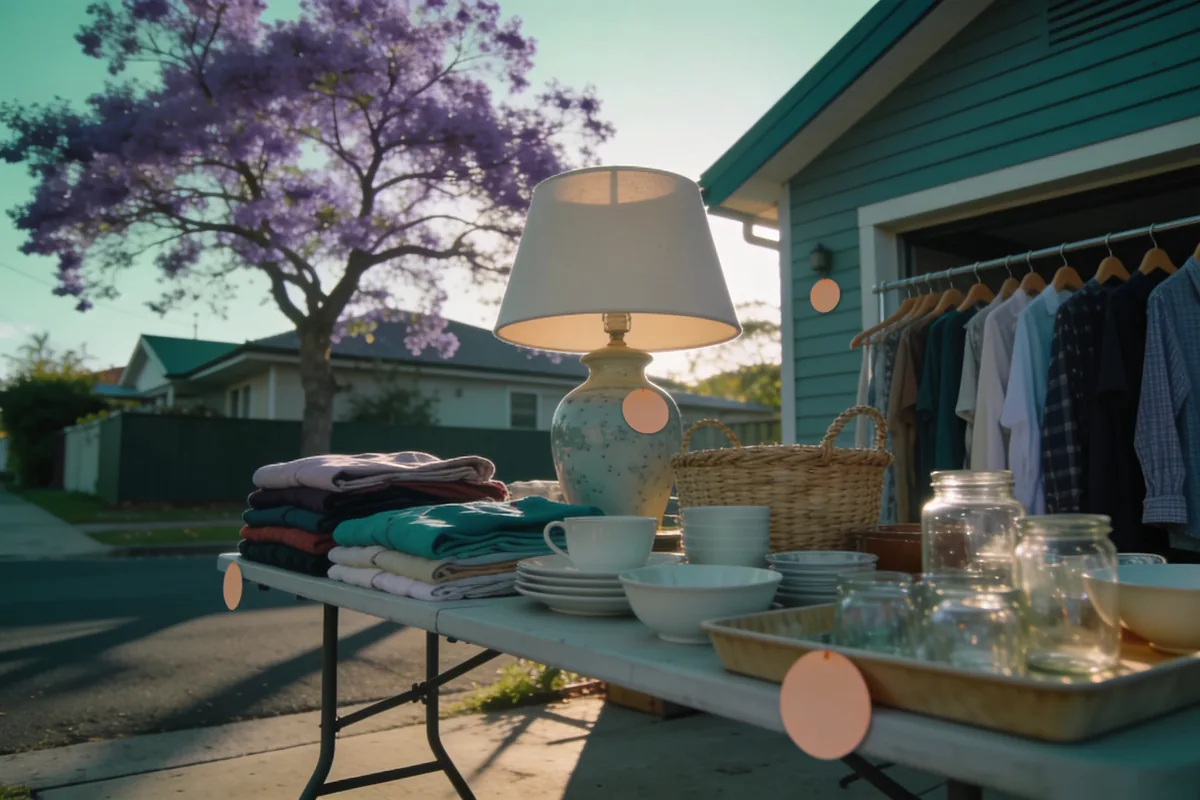
How to run a garage sale that sells out, in time for the Garage Sale Trail
There’s a room in most houses that has stopped being a room. It holds boxes, a bike nobody rides, two lamps that don’t match anything, and the bread maker that came out once in 2019. You’ve been meaning to deal with it. In November the whole suburb will be out on a Saturday morning looking for exactly that sort of thing, so this is your window.
A garage sale is a one-day clearance. It isn’t a shop, and it isn’t a way to get back what you paid. The people who run good ones treat it like moving house: the goal is an empty driveway by two o’clock and a bit of cash in your pocket. Everything below is aimed at that.
When the Garage Sale Trail is on, and how to get in
The Garage Sale Trail runs over two weekends this year: 7-8 November and 14-15 November 2026, according to the official site. You register your sale through garagesaletrail.com.au, and once you’re in, your sale goes on the map that buyers use to plan their morning. You pick your own day and your own hours inside those weekends.
Plenty of councils get behind it and promote the sales in their area. The catch is that council registration deadlines aren’t all the same, and some close in late October. If you’re reading this with three weeks to go, register now and then check your council’s own page for its cut-off and anything extra it offers.
One more thing on timing. Buyers using the map tend to plan a route, so a clear start time matters more than a long one. Seven or eight until early afternoon covers the people who’ll actually buy.
Pricing to clear, not to profit
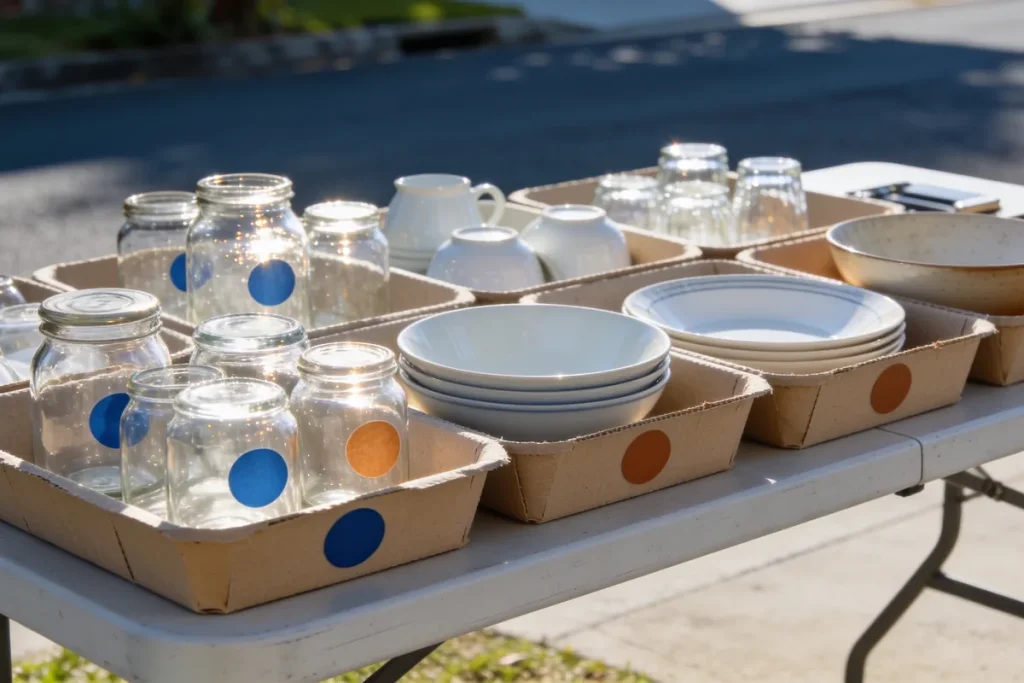
If you take one thing from this, take this: price everything. A table with no prices makes people walk past, because nobody wants to ask and then haggle over a $2 mug in front of the neighbours. You can sticker each item, or you can price by table (“everything on this table $5”), or do both. Coloured dot stickers with a key on a sheet of cardboard are quick and easy to change during the day.
The harder part is the number itself. Garage sale prices are not online prices. Someone wandering up your driveway on a Saturday expects to pay a few dollars for most things, and they’ll walk away from anything priced like a listing. That’s fine. If an item is genuinely worth real money, a good guitar, a decent bike, a solid timber dresser, don’t put it on the trestle table at all. List it online where the right buyer can find it, and give it a proper write-up. Our guide to writing a listing that sells covers the photos and description that get those bigger pieces sold.
For everything else, a few habits do most of the work:
- Bundle the small stuff. Clothes, paperbacks, kids’ toys and kitchen odds and ends sell far better by the bag than one at a time. Hand people a shopping bag and give them one price to fill it.
- Use round numbers. Fifty cents, a dollar, two, five, ten. It makes change easy and stops the mental arithmetic that slows a sale down.
- Decide your floor before anyone arrives. The serious buyers turn up early, sometimes before your stated start, and some of them will offer you very little. Know in advance which items you’ll take anything for and which you’d rather keep. Low offers are part of the day. Don’t take them personally.
- Halve it after lunch. By early afternoon, the people still coming are browsers. Drop prices, or go to “fill a bag” across the whole driveway. Whatever is left at the end is going somewhere anyway, so you may as well get a few dollars for it.
None of this needs to be precise. You’re pricing so the buyer can decide quickly and the tables keep emptying.
Signs, and the council
Signs bring in the people who aren’t using the map. They’re also the part of a garage sale most likely to get you a phone call from the council.
There’s no national rule for temporary signs. Councils set their own, and they differ. Many don’t allow signs on power poles, trees or traffic signs, and many expect you to take your signs down as soon as the sale is over. Some have rules about size or how long a sign can stay up. Your council’s website will have a page on it, often under temporary or event signage, and it’s worth five minutes before you start writing on cardboard.
As for the signs themselves, less is more. The ones that work have three things on them, big enough to read from a moving car:
- The words GARAGE SALE.
- Your street name and number.
- The start time, and an arrow.
Skip the decoration and the list of items. Put one on the nearest main road corner, one at the turn into your street, and one out the front. Then take them all down when you pack up, which is the bit people forget.
Setting up the driveway
Set up the night before if you can, or at least have everything carried to the garage. Early birds don’t wait politely while you unpack boxes.
A few practical points:
- Get things up off the ground. Trestle tables at about waist height sell better than items on a tarp, because people don’t like bending to dig through boxes.
- Hang the clothes. A borrowed clothes rack does more for clothing than any amount of folding.
- Put a “free” box at the kerb. It draws people in from the footpath, and it clears stuff you’d only pay to dump.
- Have a power point handy. Anyone looking at a lamp, a toaster or a drill will want to see it work. An extension lead from the garage saves a lot of “does it go?” conversations.
- Start with a float. Coins and small notes, more than you think you’ll need. Plenty of buyers arrive with a $50 note.
And keep the house closed. Lock the front door, shut the side gate and keep the sale to the driveway and garage. Keep the cash on you, in a bum bag or an apron, rather than in a tin on a table you might walk away from. Have a second person if you can, so one of you can deal with questions while the other takes money.
Getting paid: cash, transfer and the PayID trick
Cash is the simplest way to get paid at a garage sale. It’s instant, it’s final and nobody needs your details. Most buyers will expect to use it.
Some will want to pay by bank transfer or PayID, especially for a bigger item. That’s fine, as long as you check the money is actually in your account and the payer’s name matches the person standing in front of you before they leave with the goods. A screenshot of a “successful payment” proves nothing.
Scamwatch, the government’s scam warning service, says to be wary of being asked to pay or be paid in unusual ways, including being sent to several different PayIDs, and to check that the payee’s name matches who you’re dealing with. That’s mostly aimed at people selling online, but it applies on the driveway too.
There’s one scam you should know by name, because banks have been warning about it for a while. It goes like this. A “buyer” contacts you about an item, often one you’ve also listed online. They say they’ve tried to pay you by PayID, but your account needs a business upgrade before it can receive the money. Then you get an email that looks official, saying the same thing and asking you to pay a fee or “refund” the upgrade amount to them. You pay, and the buyer and the money are gone.
PayID does not email you. There’s no upgrade to buy. If anyone tells you otherwise, you’re talking to a scammer, and you can stop replying. Our rundown of marketplace scams in Australia goes through this one and the other common ones in more detail.
What you owe the buyer
People sometimes worry about what happens if something they sell stops working the next day. Mostly, it’s good news for the seller.
The ACCC says most consumer guarantees don’t apply to one-off sales by a person who isn’t in business, and it names garage sales as an example. So you’re not giving a shop’s refund rights on a lamp that cost someone $3. A few protections do still apply, though. You have to own what you’re selling, the buyer is entitled to keep it without someone else turning up to claim it, and it can’t have hidden debts attached.
In practice, that means two things. Say “sold as is” plainly, on a sign or out loud. And let people test things at the power point before they pay. A buyer who’s watched the kettle boil isn’t coming back to complain.
What to do with what is left
At two o’clock you’ll have a table of leftovers. Have a plan for them before the day starts, so they don’t drift back into the spare room.
Check your nearest charity shop’s drop-off hours in advance, because many don’t take donations late on a Saturday or at all on a Sunday. Put the rest on a free table at the kerb for an hour, and you’ll be surprised what goes. The bigger pieces that didn’t sell can go online during the week. And if you find you enjoyed it, a stall is the next step up. Our guide to weekend markets in Melbourne covers where to set one up, if you’re that way.
Price it, sign it, clear it
Register before your council’s cut-off, and pick your Trail weekend: 7-8 or 14-15 November. Price everything at garage sale prices and bundle the small stuff. Make a few plain signs that follow your council’s rules, and take them down afterwards. Set up early, keep the house shut and the cash on you. Check that transfers have actually landed, and ignore anyone who says your PayID needs upgrading.
Do that, and by early afternoon the driveway should be mostly bare. The spare room might even go back to being a room.
Sources: Garage Sale Trail, official site, 2026 (https://www.garagesaletrail.com.au/); ACCC, Consumer rights and guarantees (https://www.accc.gov.au/consumers/buying-products-and-services/consumer-rights-and-guarantees); Scamwatch, Buying and selling scams, 2026 (https://www.scamwatch.gov.au/types-of-scams/buying-or-selling)







Comments
1
[…] For the true leftovers, the ones no app will shift, a driveway morning still does the job, and our garage sale pricing guide covers that […]